Tidewell helps you notice the rhythm of your Zepbound® week — the food noise, the energy dips, the quiet wins — without turning it into another thing to optimize.

Zepbound® and Mounjaro® share the same active ingredient, tirzepatide, but are approved for different purposes. Your prescriber can explain what's relevant to your specific situation.
Titration refers to gradually increasing the dose over time, usually to help the body adjust and to manage side effects. Your prescriber sets the specific schedule for you.
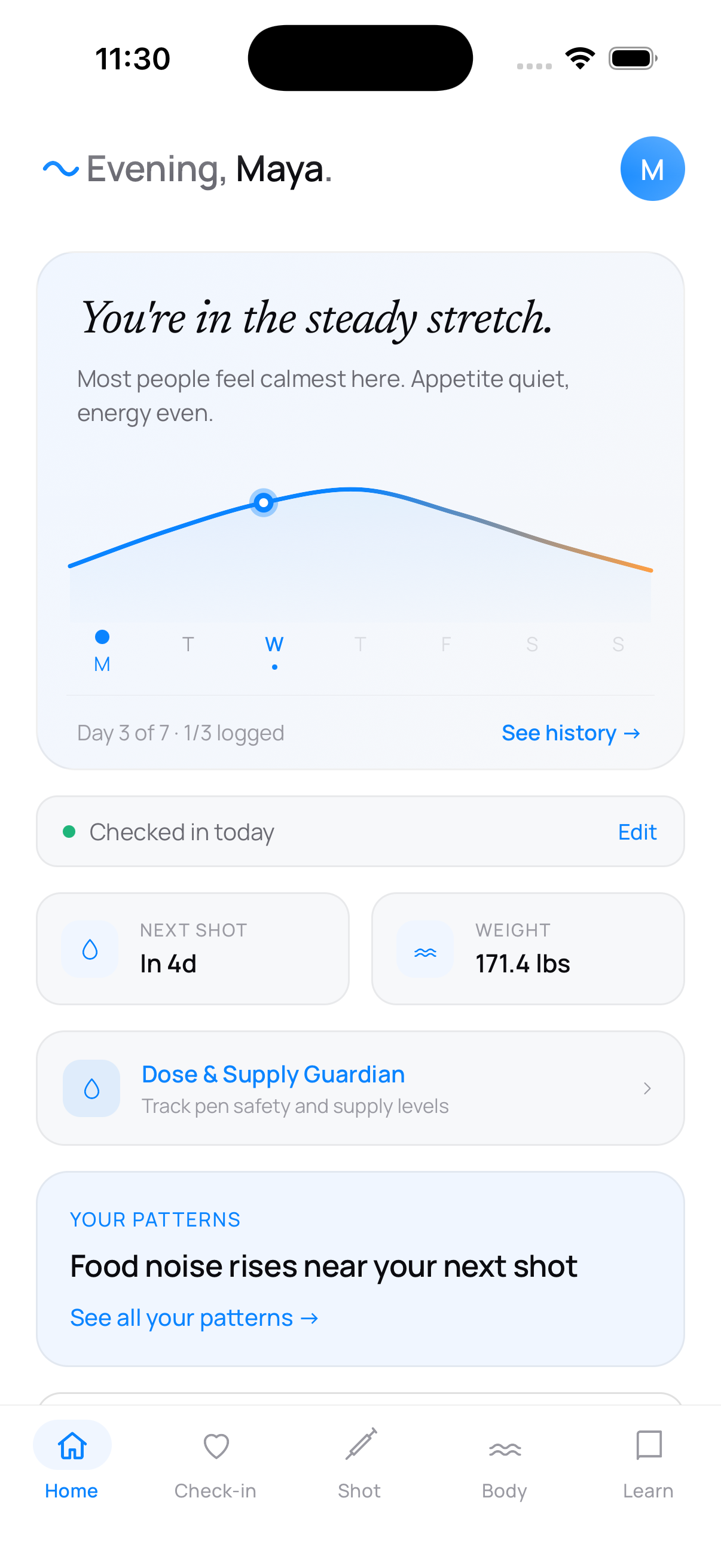
Many people notice a rhythm across their dosing week — often steadier appetite and food noise in the first days, with some return of both later on. This pattern is widely reported and isn't a sign anything is wrong.
Smaller, simpler meals, staying hydrated, and eating slowly are commonly mentioned by people managing nausea on GLP-1 medications. If nausea is severe or persistent, your prescriber may have additional options.
Every screen answers one question: does this help, or does it add noise?

This week's check-ins, your next-shot countdown, and the quiet pattern your body is making — at a glance.

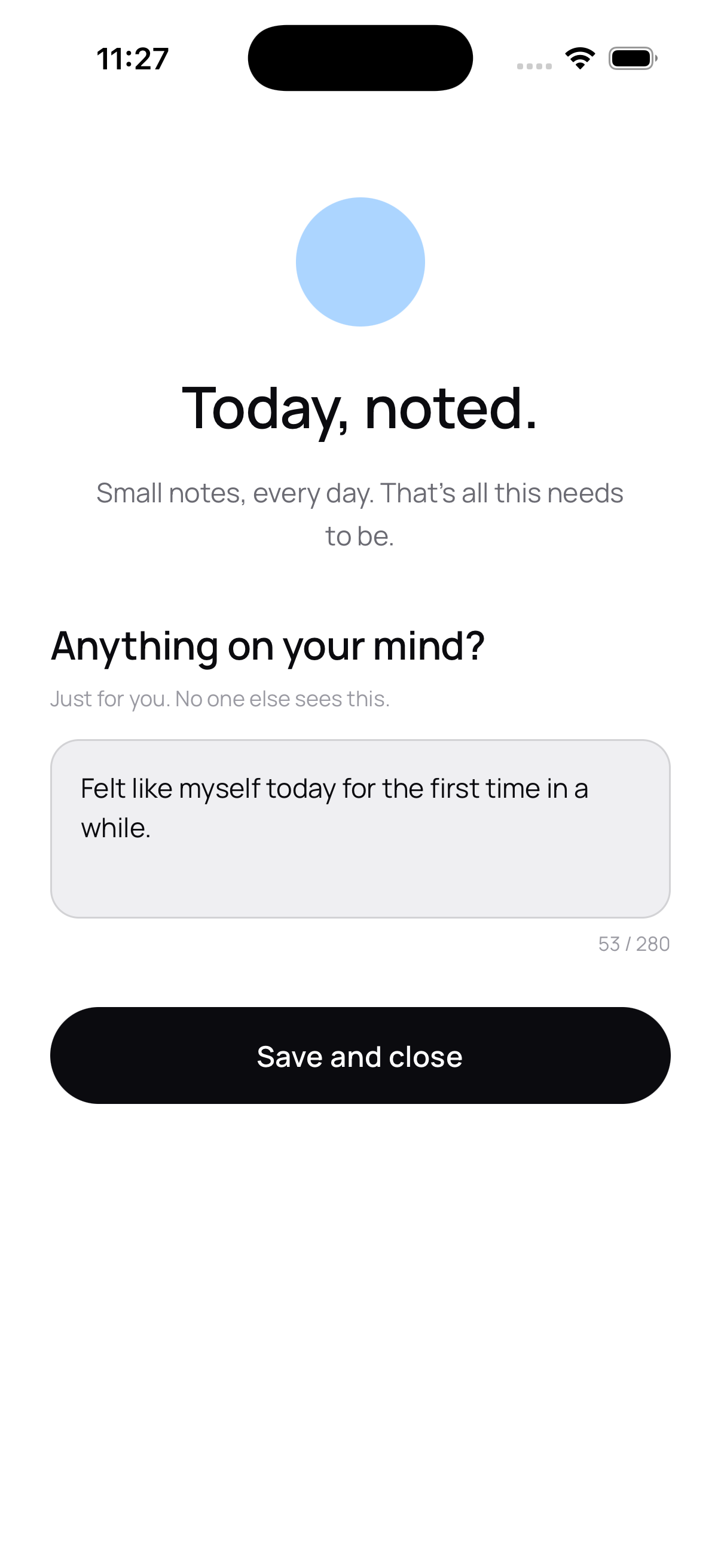
Mood, energy, food noise, and a private note if you want one. Small notes, every day — that's all it needs to be.

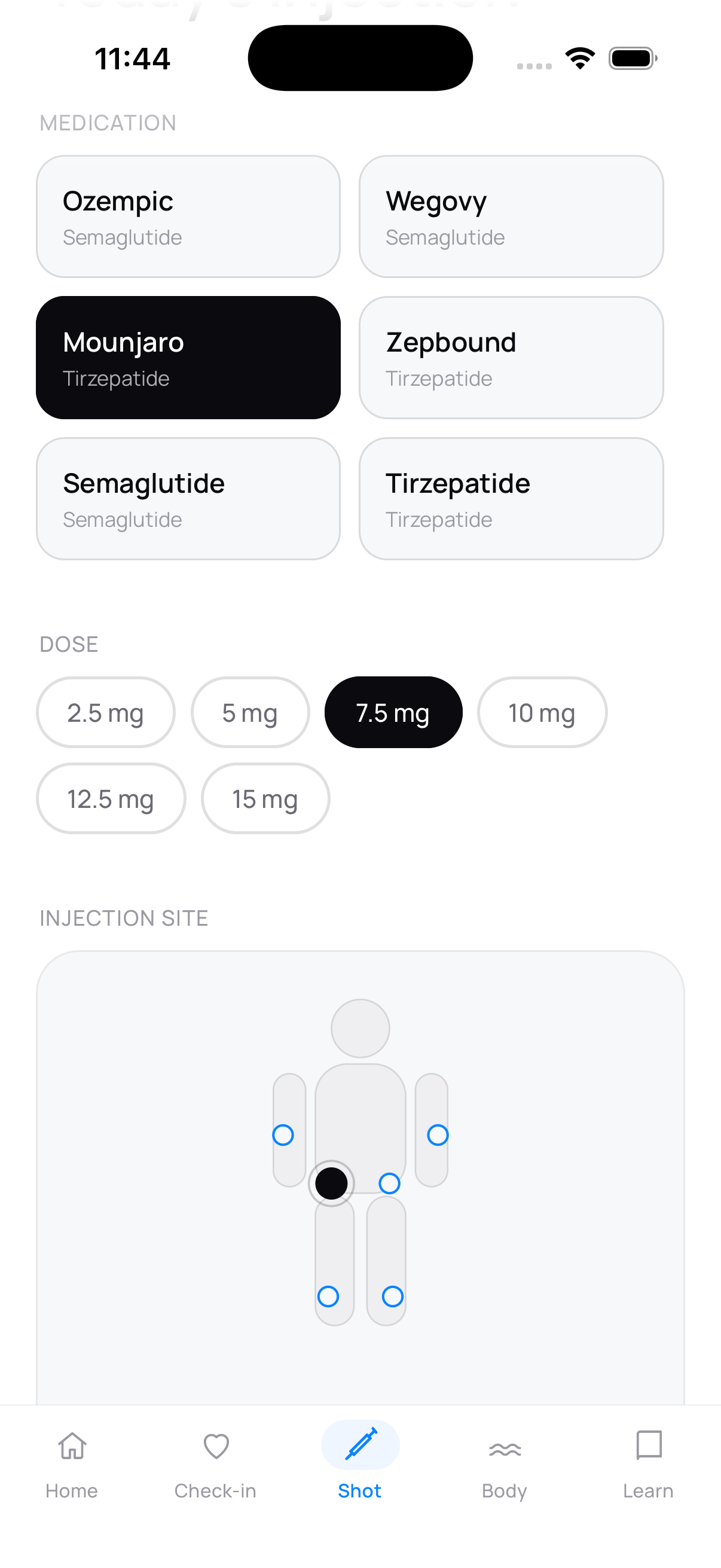
Medication, dose, injection site — with rotation tracked on a body map so no site gets overused.

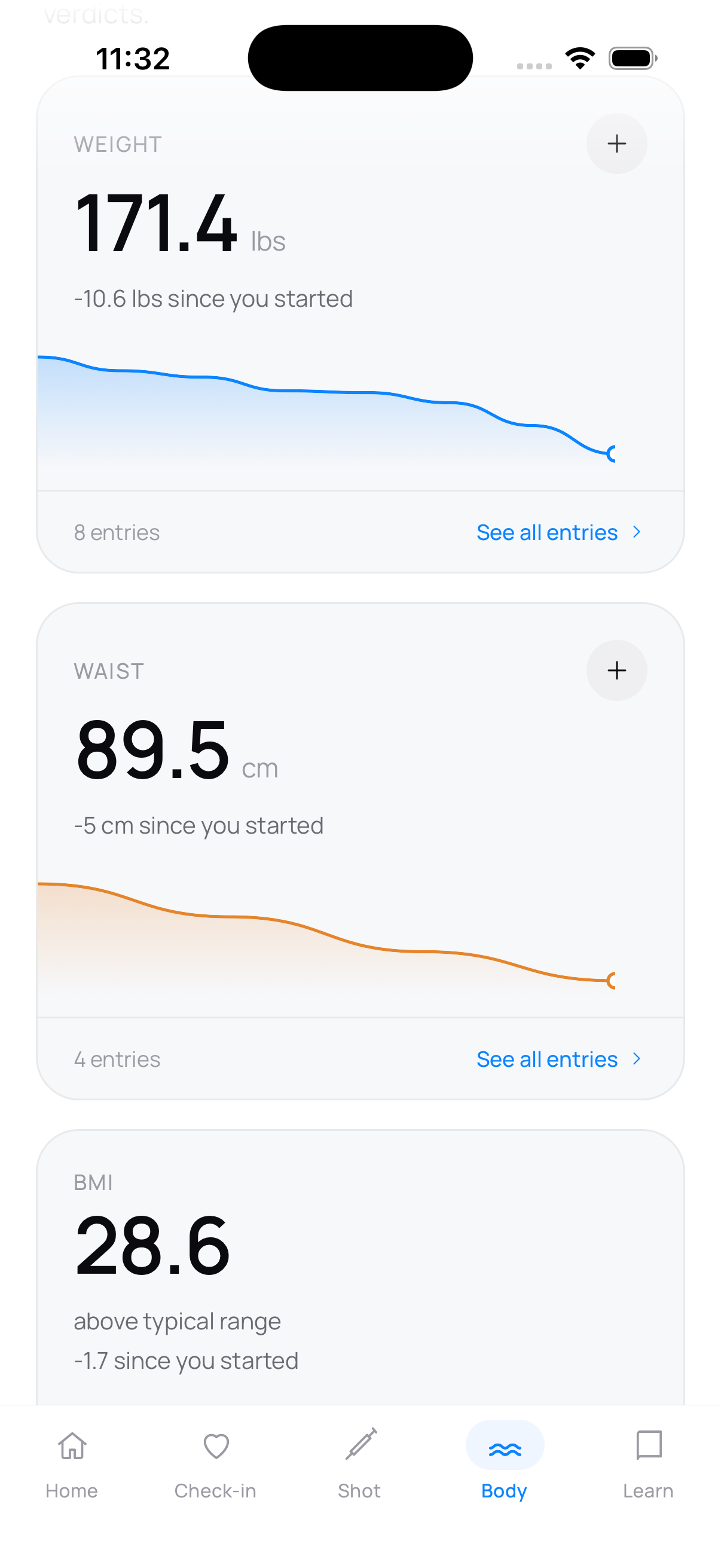
Weight, waist, and BMI over time — not numbers to stress over, but a quiet record of what's been shifting.

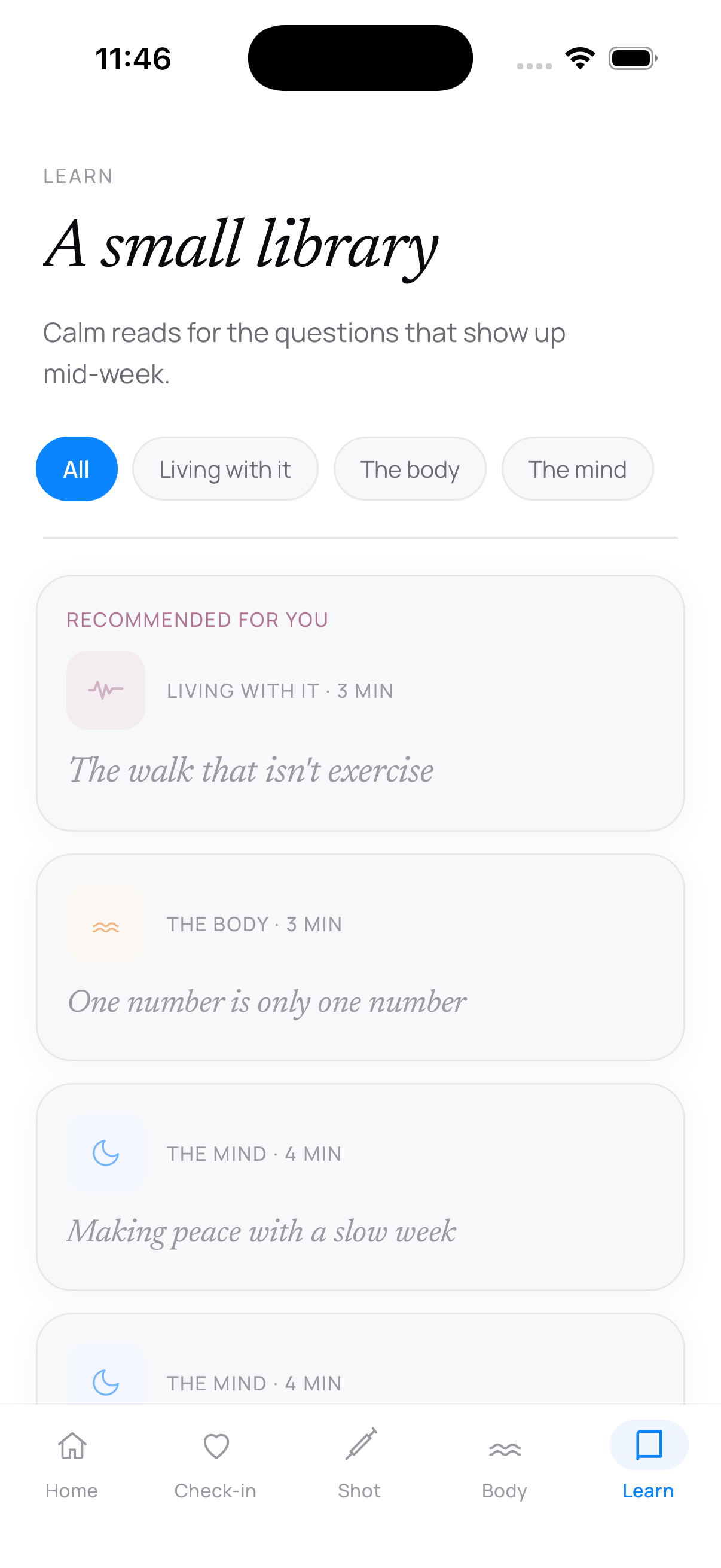
Short, calm reads on what GLP-1s actually do to your body, appetite, and relationship with food.

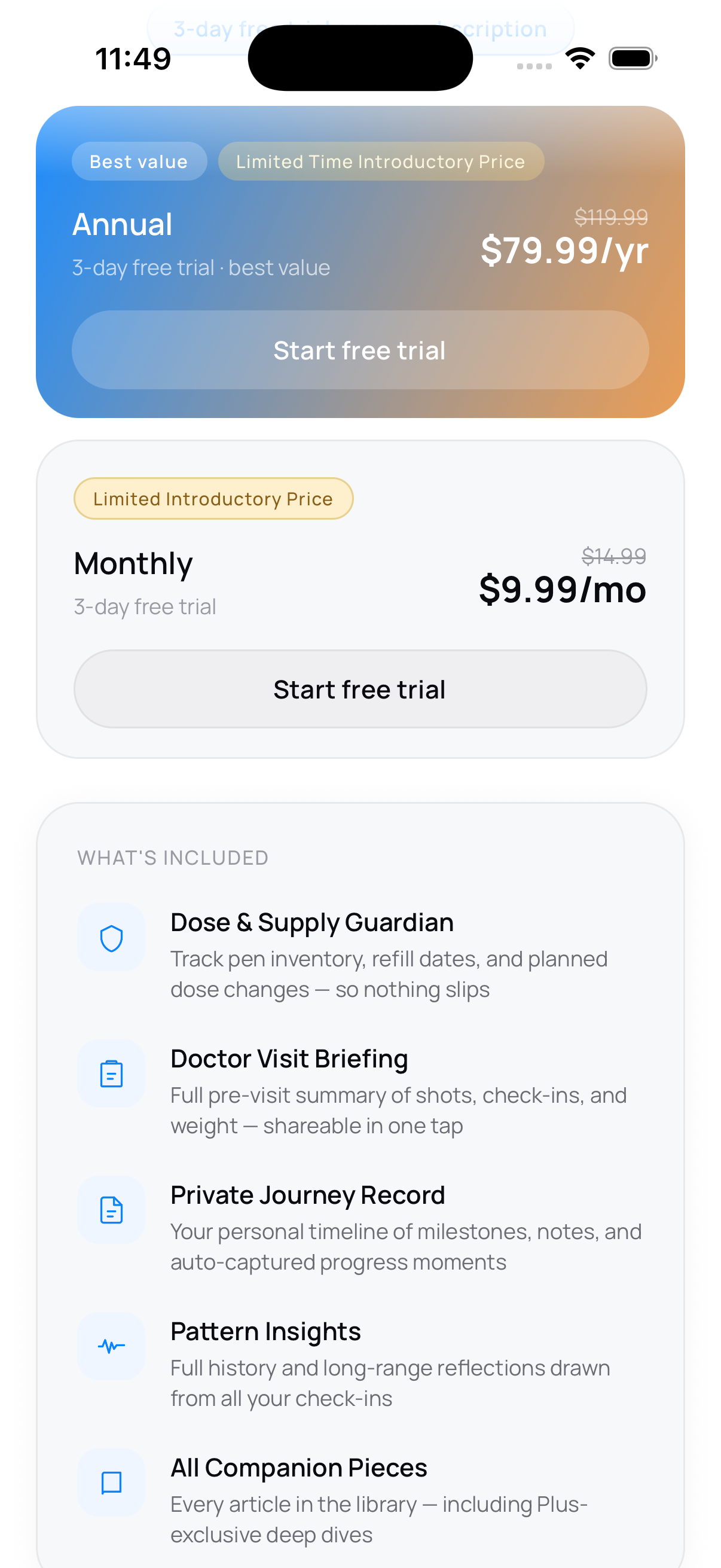
Prescriber-ready briefings, supply guardianship, and deep pattern insight.
Explore Plus ↓"Zepbound® is a tool. The week you live around it is the part nobody hands you a guide for — the food noise, the energy, the quiet identity shifts. That's what Tidewell is for."
Tidewell is a wellness companion, not a medical device. It doesn't diagnose conditions or recommend treatment. Always consult your healthcare provider about your medication and health goals.